Iranian Apricot Varieties: Everything Buyers Need to Know
Iranian apricots are among the most interesting agricultural products for both fresh-fruit consumers and the dried-fruit industry.
Known for their attractive colors, distinctive aroma, sweet or sweet-tart flavor, and wide range of varieties, apricots are cultivated in different regions of Iran. Depending on the variety, growing region, harvest time, ripeness, and intended use, Iranian apricots can differ considerably in size, color, sweetness, acidity, texture, aroma, flesh thickness, stone characteristics, shelf life, and drying performance.
For consumers, choosing an apricot is often about one simple question:
Which apricot tastes the best?
For commercial buyers, the question is more complex:
Which variety offers the right combination of flavor, size, flesh, shelf life, processing performance, appearance, and commercial value for my market?
This guide answers both questions.
Whether you are looking for fresh Iranian apricots, apricots suitable for drying, Qaisi, dried apricots, or wholesale products, understanding the differences between varieties can help you make a much more informed purchasing decision.
What Is an Apricot?
Apricot, scientifically known as Prunus armeniaca, is a stone fruit belonging to the Rosaceae family.
The fruit generally has:
- Yellow, golden, orange, or yellow-orange skin
- Soft and aromatic flesh
- A sweet, mildly acidic, or sweet-tart flavor
- A hard stone in the center
However, not all apricots taste or look the same.
Depending on the cultivar and growing conditions, an apricot may be:
- Small or large
- Pale yellow or deep orange
- Firm or soft
- Very sweet or moderately sweet
- Highly aromatic or relatively mild
- Juicy or more dense
- Thin-fleshed or thick-fleshed
These differences are extremely important in commercial markets.
Why Are Iranian Apricots Important?
Iran has a diverse climate and a long agricultural tradition, creating suitable conditions for the cultivation of many fruit crops.
Apricots are grown in different parts of the country, including areas associated with provinces such as:
- East Azerbaijan
- West Azerbaijan
- Semnan
- Razavi Khorasan
- Isfahan
- Fars
- Qazvin
- Tehran and surrounding areas
Each region may have different cultivars, production conditions, harvest periods, and market characteristics.
This geographical diversity is one of the reasons why the Iranian apricot market offers such a broad range of products.
More importantly, apricots can be sold in several forms:
Fresh fruit → dried apricots → Qaisi → processed ingredients → packaged retail products → export products
This creates opportunities throughout the agricultural and food-processing supply chain.
What Makes Iranian Apricots Different?
The term "Iranian apricot" does not refer to one single standardized product.
Iran has numerous local, traditional, and commercial apricot types. Their characteristics can vary significantly.
Important factors include:
Fruit size
Some varieties produce relatively small fruits, while others are valued for larger fruit size.
Skin color
Colors can range from pale yellow to golden and orange.
Flesh color
The flesh may vary from light yellow to deeper orange.
Sweetness
Some varieties are distinctly sweet, while others have a more balanced sweet-and-tart flavor.
Acidity
Acidity contributes significantly to the overall flavor profile and is particularly relevant for processing.
Aroma
Some apricots have a strong, characteristic fragrance, while others have a more subtle aroma.
Flesh thickness
This characteristic is particularly important when selecting apricots for drying.
Stone characteristics
Stone size and ease of separation from the flesh can affect processing efficiency.
Why Does Apricot Variety Matter?
The best apricot for one purpose may not be the best apricot for another.
For example, a variety that is excellent for fresh consumption may have a relatively delicate texture and therefore be less suitable for long-distance transportation.
Another variety may have thicker flesh and better drying characteristics, making it more suitable for producing dried apricots or Qaisi.
This is why professional buyers should choose a variety based on the intended application, rather than simply asking for the "best apricot."
Fresh Apricots vs. Dried Apricots
One of the most important distinctions in the apricot market is between fresh and dried fruit.
Fresh apricots contain a high proportion of water and are therefore more perishable.
They are generally:
- More delicate
- More sensitive to bruising
- More dependent on temperature control
- More seasonal
- More demanding in transportation
Dried apricots, on the other hand, contain substantially less water.
This provides commercial advantages such as:
- Easier transportation
- Longer storage potential
- Lower volume
- Year-round availability
- Greater convenience for retail and food manufacturing
Drying also creates additional value by converting a highly seasonal fruit into a product that can be marketed over a longer period.
What Is Qaisi?
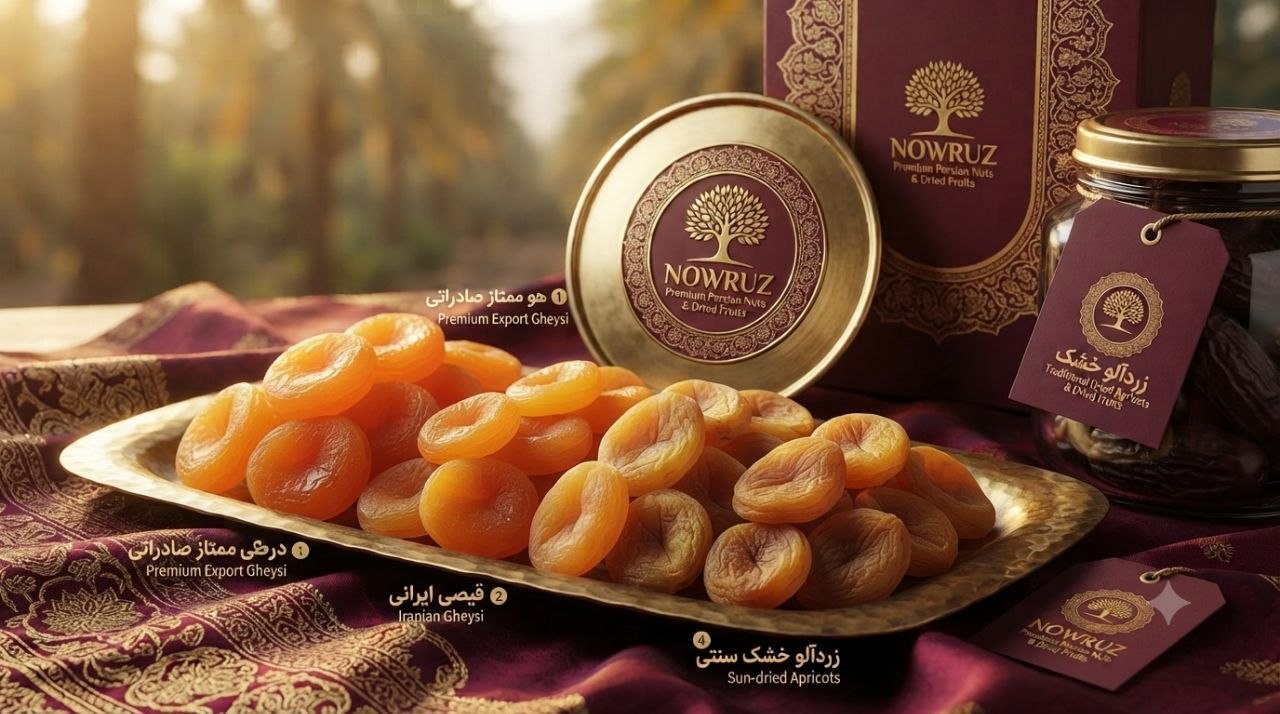
Qaisi is one of the best-known traditional and commercial forms of dried apricot associated with Iran.
The exact meaning and commercial specifications of the term may vary between markets and suppliers. Qaisi generally refers to dried apricot products produced from selected apricot fruits and processed through drying.
Depending on the variety and processing method, Qaisi can differ in:
- Color
- Size
- Thickness
- Texture
- Moisture level
- Processing method
- Appearance
- Flavor
For international buyers, it is therefore important to define the product specification rather than relying on the word "Qaisi" alone.
How Is Qaisi Produced?
A general Qaisi production process may include:
Fruit selection → washing → preparation → cutting or splitting → stone removal → processing → drying → cooling → grading → packaging
The exact process varies according to the producer, variety, drying method, and target market.
Traditional production may use natural or sun drying, while commercial facilities can use controlled drying systems.
Important production considerations include:
- Hygiene
- Temperature control
- Moisture management
- Drying consistency
- Sorting
- Foreign-material control
- Packaging
- Storage
The objective is to create a dried apricot product with a desirable appearance, flavor, texture, moisture level, and commercial stability.
Main Types of Iranian Dried Apricots
Iranian dried apricots can be classified according to several characteristics, including:
- Color
- Drying method
- Processing method
- Size
- Moisture
- Appearance
Among the commercially interesting categories are golden Qaisi, naturally dried apricots, darker traditional-style Qaisi, and selected premium grades.
Golden Qaisi
Golden Qaisi is recognized for its attractive golden or light-orange appearance.
Its bright color can make it particularly appealing for:
- Retail packaging
- Premium dried-fruit stores
- Gift boxes
- Mixed nuts and dried-fruit products
- Export-oriented products
- Private-label products
However, color should never be used as the only measure of quality.
A high-quality golden Qaisi should also be evaluated for:
Flavor + texture + moisture + cleanliness + size consistency + defect rate.
Naturally Dried Apricots
Naturally dried apricots are produced using traditional drying methods, often involving exposure to natural conditions.
This style of production is valued by consumers who prefer products with a more traditional appearance and processing identity.
However, commercial production still requires careful attention to:
- Hygiene
- Environmental exposure
- Dust
- Insects
- Moisture
- Storage
- Packaging
For international trade, natural drying does not remove the need to meet applicable food-safety requirements.
Processed Dried Apricots
Some dried apricots are processed using techniques designed to influence characteristics such as:
- Color retention
- Drying speed
- Appearance
- Storage stability
When purchasing commercially, buyers should ask suppliers about the processing method used and confirm that it complies with the requirements of the target market.
This is especially important for export shipments.
Dark or Traditional-Style Qaisi
Dark-colored Qaisi may result from several factors, including:
- Apricot variety
- Drying conditions
- Oxidation
- Processing
- Storage
Some consumers specifically prefer darker dried apricots because of their traditional appearance and natural-looking color.
As with golden Qaisi, quality should be assessed based on multiple factors rather than color alone.
What Makes a Premium Dried Apricot?
A premium dried apricot is not defined by one characteristic.
Commercial quality may include:
- Appropriate size
- Attractive appearance
- Consistent color
- Pleasant texture
- Good flavor
- Low defect rate
- Clean processing
- Good grading
- Consistent moisture
Therefore, the term "premium" should ideally be supported by a clear product specification.
How to Identify High-Quality Dried Apricots
Professional buyers should evaluate dried apricots systematically.
Color
The color should be appropriate for the product type and processing method.
Size
Uniform size is particularly important for retail packaging.
Texture
The texture should match the intended application.
Aroma
A natural, pleasant apricot aroma is desirable.
Flavor
The product should have a clean fruit flavor without undesirable odors or flavors.
Cleanliness
The product should be free from unacceptable foreign materials and contamination.
Defect Rate
Broken pieces, severe discoloration, damaged fruit, or inconsistent pieces can reduce commercial grade.
Moisture
Moisture should be appropriate for the product specification and storage conditions.
Why Does Color Matter in Dried Apricots?
Color is one of the first characteristics consumers notice.
Golden and orange dried apricots often have strong visual appeal, especially in retail packaging.
However, a brighter color does not automatically mean better quality.
Color can be affected by:
- Variety
- Ripeness
- Drying conditions
- Processing
- Oxidation
- Storage
For this reason, color should be evaluated together with flavor, texture, moisture, cleanliness, and overall appearance.
The Taste Profile of Iranian Apricots
Taste is one of the most important differences among apricot varieties.
Depending on the cultivar and ripeness, Iranian apricots can have profiles ranging from:
Very sweet
These varieties are particularly attractive for fresh consumption.
Honey-like
Highly ripe fruits may have a rich and concentrated sweetness.
Sweet and aromatic
These apricots combine sweetness with a pronounced fruit aroma.
Sweet and slightly tart
The balance between sugar and acidity creates a more complex flavor profile.
Tart
Some fruits are more suitable for processing than direct fresh consumption.
The final taste depends on both sugar content and acidity, as well as aroma compounds and ripeness.
Which Iranian Apricot Is Best for Fresh Eating?
There is no single answer.
The ideal fresh apricot depends partly on consumer preference.
Many consumers prefer fruit that is:
- Sweet
- Juicy
- Aromatic
- Soft but not mushy
- Attractive in color
- Fully but appropriately ripe
Someone who prefers a more refreshing flavor may prefer a variety with a stronger sweet-and-tart balance.
Therefore, "best" is ultimately a combination of variety, ripeness, quality, and personal taste.
Which Apricot Is Best for Drying?
Apricots intended for drying require different characteristics.
Important factors include:
- Flesh thickness
- Sugar content
- Flesh-to-stone ratio
- Texture
- Drying performance
- Fruit size
- Color
- Processing yield
A very sweet apricot is not automatically the most economical drying variety.
The ideal fruit should produce a dried product with desirable:
Flavor + texture + appearance + yield + moisture stability.
Which Apricot Is Best for Qaisi?
For Qaisi production, the raw material is critical.
A suitable apricot variety should ideally offer:
- Adequate flesh
- Suitable sugar content
- Desirable color
- Appropriate texture
- Favorable stone characteristics
- Good drying performance
- Pleasant flavor after drying
For commercial buyers, testing a representative sample before committing to a large order is highly recommended.
Important Iranian Apricot Varieties and Types
Iran has a considerable diversity of apricot cultivars and local types.
Among the names known in the Iranian market are:
- Shahroudi apricot
- Asgarabadi apricot
- Nouri apricot
- Ordubadi apricot
- Nasiri apricot
- Rekab apricot
- Various local regional apricots
The exact characteristics associated with a particular local name may vary depending on the region and market.
Therefore, professional buyers should consider:
Variety + origin + actual sample + grade + specification
rather than relying solely on the cultivar name.
Shahroudi Apricot
Shahroudi apricots are associated with the Shahroud area and Semnan Province, an important fruit-growing region in Iran.
As with other apricot groups, actual commercial characteristics can vary depending on the orchard and cultivar.
When purchasing Shahroudi apricots, buyers should evaluate:
- Size
- Color
- Ripeness
- Flavor
- Texture
- Intended use
- Grade
The product specification should always accompany the variety name in commercial transactions.
Asgarabadi Apricot
Asgarabadi is a recognized apricot name in the Iranian market and is associated particularly with the agricultural traditions of northwestern Iran.
The fruit can be evaluated for both fresh consumption and, depending on its specific characteristics, processing.
For commercial purchasing, the name alone is not sufficient. A buyer should verify the actual:
- Size
- Flavor
- Color
- Flesh
- Ripeness
- Processing suitability
Nouri Apricot
Nouri is another name used for an Iranian apricot type.
Its exact commercial characteristics can vary according to growing region and production conditions.
As with all apricot varieties, the best approach for wholesale purchasing is to evaluate a representative sample and establish a clear specification.
Ordubadi Apricot
Ordubadi is a recognized apricot type in Iran, with connections to the agricultural traditions of northwestern Iran.
Depending on its characteristics and production conditions, it may be used for fresh consumption or processing.
Commercial buyers should evaluate the actual fruit rather than assuming that every product sold under the same local name has identical characteristics.
Local Iranian Apricots: A Valuable Agricultural Diversity
One of the most interesting aspects of Iran's apricot industry is the diversity of local varieties.
Some local types may have strong regional reputations while remaining relatively unknown in international markets.
This creates opportunities for specialty products based on:
- Distinctive flavor
- Strong aroma
- Traditional appearance
- Regional origin
- Unique processing characteristics
For premium food markets, geographic identity and traditional varieties can sometimes become valuable marketing attributes when supported by consistent product quality.
Fresh Apricot Selection Guide
When buying fresh apricots, consumers should consider:
Appearance
Look for healthy fruit with an appropriate color for the variety.
Aroma
A pleasant fruit aroma can indicate desirable ripeness.
Texture
The fruit should have an appropriate firmness for immediate consumption or transportation.
Skin condition
Avoid fruit with excessive bruising, severe cuts, or visible deterioration.
Ripeness
The correct ripeness depends on whether the fruit will be eaten immediately or transported before sale.
How to Select Apricots for Drying
If the goal is to purchase apricots for drying, the selection criteria change.
Look for fruit with:
- Adequate flesh thickness
- Appropriate sugar content
- Favorable flesh-to-stone ratio
- Suitable texture
- Good drying characteristics
- Consistent size
- Low defect levels
A variety that performs well in fresh markets may not necessarily provide the highest drying yield.
Apricots in the Food Industry
Apricots can be used in a wide range of food products.
Jam
Apricots are widely used in jam because of their characteristic aroma and flavor.
Marmalade
Their fruit flavor and texture make apricots suitable for marmalade-style products.
Fruit Leather
Apricot can be processed into fruit leather and similar concentrated fruit products.
Bakery Products
Dried apricots can be incorporated into:
- Cakes
- Cookies
- Pastries
- Sweet breads
Breakfast Products
They can be used in:
- Granola
- Cereal mixes
- Dried-fruit blends
Snack Products
Dried apricots are widely suitable for:
- Trail mixes
- Nut and fruit combinations
- Healthy snack assortments
- Retail dried-fruit packs
Iranian Apricots in Traditional Cuisine
Dried apricots and Qaisi have long been associated with traditional food culture in Iran.
They can be used in dishes where a combination of:
sweetness + acidity + fruity aroma
is desirable.
Potential applications include:
- Rice dishes
- Stews
- Traditional recipes
- Desserts
- Pastries
- Fruit-based dishes
The distinctive flavor of dried apricot can add complexity to both sweet and savory foods.
Fresh Apricots vs. Qaisi
| Feature | Fresh Apricots | Qaisi / Dried Apricots |
|---|---|---|
| Water content | High | Lower |
| Shelf life | Shorter | Generally longer |
| Transportation | More sensitive | Easier |
| Availability | Seasonal | Can be available year-round |
| Main use | Fresh consumption | Snacks, cooking, food processing |
| Commercial form | Fresh fruit | Dried and packaged product |
| Value addition | Limited | Higher after processing |
Buying Iranian Apricots Wholesale
Wholesale buyers should not evaluate apricots based only on price per kilogram.
A professional purchase specification should include:
- Variety
- Origin
- Size
- Color
- Ripeness
- Grade
- Intended use
- Defect tolerance
- Packaging
- Quantity
- Delivery requirements
For dried apricots, additional specifications may include:
- Moisture
- Processing method
- Color
- Size
- Defect percentage
- Packaging format
Why Should Buyers Request Samples?
Two products can both be marketed as:
"Premium Iranian Dried Apricots"
while having very different characteristics.
They may differ in:
- Color
- Size
- Texture
- Moisture
- Flavor
- Processing
- Defect rate
A sample allows the buyer to evaluate the actual product before placing a large order.
For long-term business relationships, maintaining a reference sample can also help both parties maintain consistent quality from shipment to shipment.
Factors That Affect Iranian Apricot Prices
Apricot prices fluctuate according to market conditions.
For fresh apricots, important factors include:
- Variety
- Region
- Harvest season
- Supply and demand
- Fruit size
- Grade
- Ripeness
- Harvest cost
- Transportation
For dried apricots and Qaisi, additional factors include:
- Drying method
- Processing method
- Color
- Size
- Moisture
- Defect rate
- Sorting
- Packaging
- Order volume
Therefore, a professional price quotation should always be based on a clearly defined product specification.
Packaging Iranian Apricots and Dried Apricots
Packaging plays an important role in protecting quality and creating commercial value.
Dried apricots can be packaged in:
- Stand-up pouches
- Resealable bags
- Transparent retail packs
- Food-grade plastic containers
- Vacuum packaging
- Kraft-style packaging
- Premium gift boxes
- Bulk cartons
Good packaging can help:
- Protect the product
- Reduce exposure to moisture
- Improve presentation
- Support brand identity
- Communicate specifications
- Improve retail appeal
For export markets, labeling should comply with the requirements of the destination country.
Iranian Apricots for Export
Iranian apricots and dried apricot products can serve several international market segments, including:
- Importers
- Wholesale distributors
- Food manufacturers
- Dried-fruit retailers
- Specialty food stores
- Private-label brands
- Foodservice companies
However, export success requires more than good taste.
International buyers generally need reliable:
- Product specifications
- Quality consistency
- Food safety
- Packaging
- Labeling
- Documentation
- Traceability
- Supply continuity
Requirements vary by destination market and product category.
Iranian Apricots and the Nowruz Brand
The Nowruz brand can present Iranian apricots as part of a broader portfolio of Iranian agricultural products and dried fruits.
A strong commercial brand should answer the questions customers naturally ask:
What is this product?
Where does it come from?
What does it taste like?
What makes it different?
How should it be used?
Who is it suitable for?
How is it processed and packaged?
For this reason, product content should go beyond simply stating that an apricot is "high quality."
Instead, the product should be described through measurable and understandable characteristics such as variety, size, color, texture, flavor, origin, processing method, and intended application.
SEO Content Strategy for Iranian Apricots
A strong SEO strategy can use this article as the main pillar page for the broader topic of Iranian apricots.
The main page can target:
Iranian Apricot Varieties
Then supporting articles can target more specific search intentions.
Variety Cluster
- Shahroudi Apricot
- Asgarabadi Apricot
- Nouri Apricot
- Ordubadi Apricot
- Nasiri Apricot
- Rekab Apricot
- Iranian Local Apricot Varieties
- Best Iranian Apricots for Fresh Eating
- Best Apricots for Drying
Dried Apricot Cluster
- Iranian Dried Apricots
- What Is Qaisi?
- Iranian Qaisi
- Golden Qaisi
- Naturally Dried Apricots
- Dark Qaisi
- Premium Qaisi
- Types of Dried Apricots
- Difference Between Qaisi and Dried Apricots
Commercial Cluster
- Buy Iranian Apricots Wholesale
- Iranian Dried Apricots Wholesale
- Buy Qaisi Wholesale
- Iranian Apricot Supplier
- Iranian Dried Fruit Supplier
- Iranian Apricot Export
- Qaisi for Export
- Private Label Dried Apricots
- Iranian Apricot Price
Educational Cluster
- How Are Apricots Dried?
- How to Store Dried Apricots
- How to Choose High-Quality Dried Apricots
- How to Identify Premium Qaisi
- Fresh vs. Dried Apricots
- How Qaisi Is Made
- Best Apricots for Qaisi Production
Why Should These Articles Be Internally Linked?
A well-structured website should not treat each article as an isolated page.
Instead, the content should form a connected topical structure:
Apricot
↓
Iranian Apricot Varieties
↓
Specific Apricot Varieties
↓
Apricots for Drying
↓
Dried Apricots
↓
Qaisi
↓
Types of Qaisi
↓
Wholesale & Export
This structure helps users move from general information to specific products and eventually to purchasing information.
It also creates a stronger topical relationship between related pages.
Frequently Asked Questions About Iranian Apricots
What are Iranian apricots?
Iranian apricots are apricots grown in different regions of Iran. The country has numerous local and commercial varieties that differ in size, color, flavor, aroma, texture, and processing suitability.
What is Qaisi?
Qaisi is a traditional and commercial form of dried apricot associated with Iran. Its exact characteristics can vary depending on the variety and drying or processing method.
Are Qaisi and dried apricots the same thing?
The terms can overlap in commercial markets, but products may differ in shape, processing method, moisture, color, size, and specifications.
Which Iranian apricot is the sweetest?
Sweetness varies according to variety, ripeness, growing conditions, and harvest stage. A product sample is the most reliable way to evaluate the actual sweetness of a commercial batch.
Which apricot is best for drying?
A suitable drying variety generally has good flesh thickness, appropriate sugar content, a favorable flesh-to-stone ratio, suitable texture, and good drying performance.
Is a larger apricot always better?
No. Size is only one quality factor. Flavor, aroma, flesh, texture, ripeness, defect rate, and intended use can be equally or more important.
What is the best apricot for Qaisi?
The best variety depends on the desired dried product. Important characteristics include flesh thickness, sugar content, flesh-to-stone ratio, texture, drying performance, color, and post-drying flavor.
How should dried apricots be stored?
Dried apricots should generally be protected from excessive moisture, heat, and direct light and stored according to the product's packaging instructions.
What determines the price of Iranian dried apricots?
Price can depend on variety, grade, size, color, moisture, processing method, defect rate, packaging, order volume, supply, and market conditions.
Can Iranian dried apricots be exported?
Iranian dried apricots can be supplied to international markets, provided that the product, packaging, labeling, documentation, and food-safety requirements comply with the destination market.
How to Choose the Right Iranian Apricot
The best purchasing decision starts by defining the purpose.
For fresh consumption
Prioritize:
Flavor + aroma + ripeness + texture + appearance
For drying
Prioritize:
Flesh thickness + sugar + flesh-to-stone ratio + drying performance
For Qaisi production
Prioritize:
Processing yield + flesh + flavor + color + texture + drying stability
For wholesale trade
Prioritize:
Grade + consistency + size + quality + packaging + supply reliability
For export
Prioritize:
Specification + food safety + consistency + packaging + documentation + destination-market compliance
From Iranian Orchards to Global Markets
The commercial potential of Iranian apricots extends far beyond the fresh-fruit season.
The value chain can be viewed as:
Orchard → Fresh Apricot → Selection → Processing → Dried Apricot → Qaisi → Grading → Packaging → Branding → Export
Each stage can create additional value.
This is why apricots represent not only a seasonal fruit category but also an important opportunity within the dried-fruit and food-processing industries.