Introduction
Apricot is one of Iran's best-known summer fruits and an important agricultural product with a wide range of fresh and processed applications. Beyond fresh consumption, Iranian apricots can be processed into dried apricots, Qaisi, apricot sheets, jam, marmalade, fruit leather and other food products.
The combination of natural sweetness, distinctive aroma, attractive color and processing potential makes apricots an interesting product for both consumers and professional buyers. For international buyers, Iranian apricots can also represent an opportunity to source a versatile agricultural product that can enter several different market segments, from fresh fruit and retail dried fruit to food manufacturing and wholesale distribution.
This comprehensive guide explains what apricots are, Iranian apricot varieties, how apricots are dried, what Qaisi means, how to evaluate quality, how dried apricots are used, what affects prices and what buyers should consider when sourcing Iranian apricot products.
What Are Apricots?
Apricot, scientifically known as Prunus armeniaca, is a stone fruit belonging to the Rosaceae family. The fruit generally has yellow, golden, orange or reddish skin, soft and juicy flesh, a sweet or sweet-tart flavor, a characteristic fruity aroma and a hard stone in the center.
Apricot characteristics can vary considerably depending on the cultivar, growing region, climate, maturity stage, harvesting conditions and post-harvest handling. This diversity is commercially important because not every apricot variety is equally suitable for every purpose. Some varieties are particularly attractive for fresh consumption, while others may be more suitable for drying and producing Qaisi or other processed products.
Why Are Iranian Apricots Important?
Iran has a diverse agricultural climate, allowing different fruit crops to be cultivated across various regions. Apricots are grown in several parts of the country, with production associated with areas including East Azerbaijan, West Azerbaijan, Semnan, Razavi Khorasan, Isfahan, Fars, Qazvin, Tehran and surrounding areas.
One of the major commercial advantages of apricots is their processing flexibility. A single agricultural product can enter several value chains: Fresh apricot → dried apricot → Qaisi → food processing → retail packaging → export. This makes apricots particularly interesting from a commercial and supply-chain perspective.
Iranian Apricots and Their Distinctive Characteristics
Iranian apricots are not a single standardized product. Different cultivars and growing regions produce fruit with different characteristics. Commercial buyers may evaluate apricots based on fruit size, skin color, flesh color, sweetness, acidity, aroma, flesh firmness, juice content, stone characteristics, ripening period, shelf life and suitability for drying.
These characteristics become particularly important when determining the final application of the fruit. For example, an apricot selected for fresh retail sales may have different specifications from one purchased specifically for dried-fruit production.
Iranian Apricot Varieties
One of the most important characteristics of the Iranian apricot market is its variety of cultivars. Apricot cultivars can differ in harvesting season, fruit size, color, flavor, sugar content, flesh texture, stone characteristics, transportability and drying performance.
For professional purchasing, however, it is better to define the product not only by its commercial name but also by its origin, cultivar, grade and intended application. This approach helps buyers compare products more accurately.
Fresh Apricots vs. Dried Apricots
One of the most important commercial differences between fresh and dried apricots is their water content. Fresh apricots are juicy, perishable, sensitive to handling, more dependent on rapid distribution and often dependent on appropriate temperature control. Dried apricots, on the other hand, contain significantly less water and generally have longer storage potential, easier transportation, lower volume, broader distribution opportunities and year-round retail potential.
For this reason, drying is one of the most important ways of creating additional value from apricot production.
What Is Qaisi?
Qaisi is one of the most important traditional and commercial dried-apricot products associated with Iran. In general market usage, Qaisi refers to dried apricot products prepared from apricot fruit through drying and processing. Depending on the variety and production method, Qaisi can differ in color, size, texture, moisture, thickness, drying method, processing method and appearance.
The terms Qaisi, dried apricot and apricot sheet can sometimes overlap in the Iranian market, although commercial specifications may distinguish them according to shape, processing and intended use. For international trade, it is therefore important to define the exact product specification instead of relying only on the word "Qaisi."
How Are Apricots Turned Into Qaisi?
The general processing sequence may include: Fruit selection → washing → preparation → cutting or halving → stone removal → processing → drying → cooling → sorting → packaging. The exact procedure depends on the desired product. Traditional production may involve natural or sun-drying techniques, while commercial facilities may use controlled drying systems.
Professional processing should focus on hygiene, controlled drying, product consistency, appropriate moisture, foreign-material control, sorting, packaging and storage conditions. The objective is to produce a dried fruit that is stable, attractive and appropriate for its target market.
Types of Qaisi and Dried Apricots
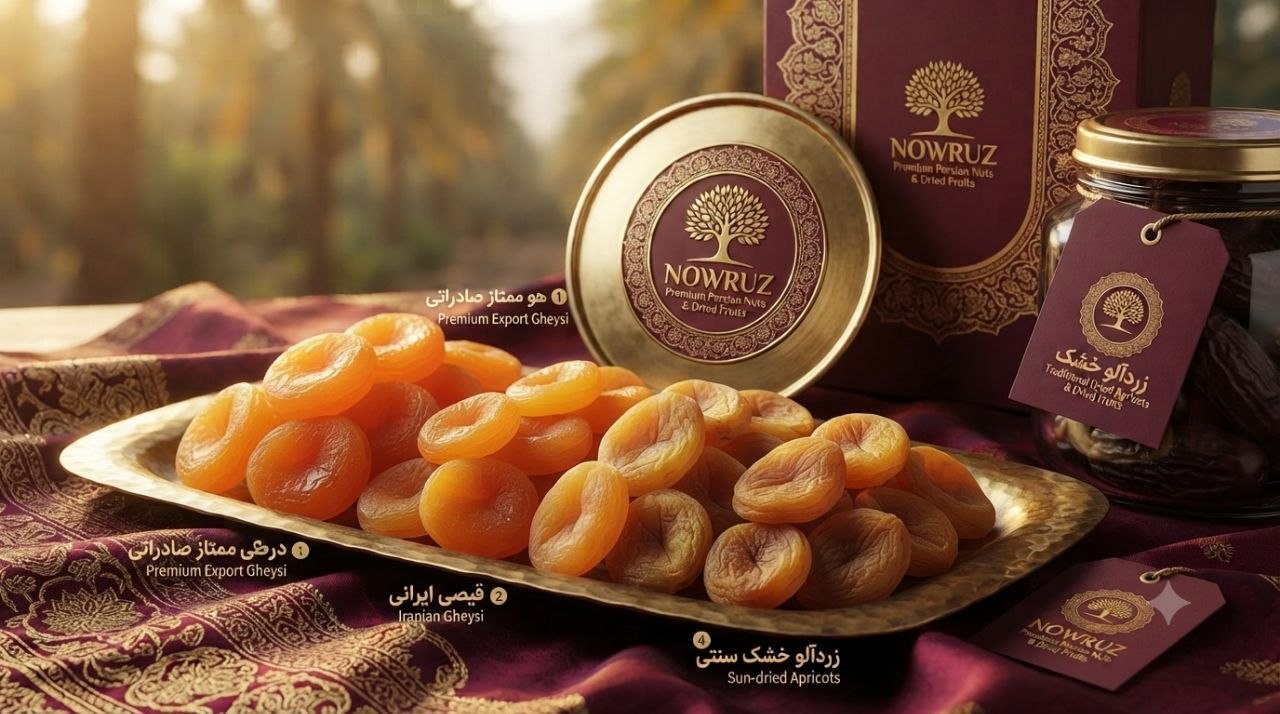
The dried-apricot market includes several product categories. Golden Qaisi is known for its bright and attractive appearance, making it suitable for retail packaging, premium dried-fruit assortments, gift boxes, specialty stores and export markets. Sun-Dried Qaisi represents a more traditional approach to dried-apricot production. Acid-Processed Qaisi is produced using specific processing methods that can influence color, drying speed, appearance and shelf stability. Dark or Black Qaisi can be associated with apricot variety, drying method, processing conditions, natural oxidation and storage conditions. Premium Qaisi is generally positioned according to a combination of factors such as larger size, better appearance, more consistent color, lower defect rate, better sorting, appropriate texture and professional packaging.
What Makes a High-Quality Dried Apricot?
A good dried apricot should be evaluated through several characteristics rather than one visual feature. Important criteria include color (consistent with the product type and processing method), size (uniformity especially important for retail and premium applications), texture (appropriate for its intended market), aroma (natural and pleasant apricot aroma), flavor (pleasant fruity flavor without undesirable off-notes), cleanliness (free from visible foreign materials), defect rate (broken or damaged pieces affect commercial grade) and moisture (appropriate for product specification and storage conditions).
Why Color Matters in Dried Apricots
Color is usually the first characteristic consumers notice. A bright golden appearance can make dried apricots particularly attractive in retail packaging. However, color is influenced by several factors, including cultivar, ripeness, drying process, processing method, oxygen exposure and storage conditions.
Therefore, the assumption that "the brighter the dried apricot, the better the quality" is too simplistic. Professional buyers should evaluate color together with texture, flavor, moisture, processing method, cleanliness and defect level.
Nutritional Value of Apricots
Apricots contain naturally occurring nutrients and plant compounds, including dietary fiber, natural carbohydrates, natural sugars, vitamins, minerals, carotenoid and other plant compounds. The nutritional profile varies according to cultivar, ripeness, processing and whether the fruit is fresh or dried.
Drying removes much of the water from the fruit, meaning nutrients and natural sugars become more concentrated by weight. For this reason, dried apricots can be nutritionally dense, but portion size should still be considered as part of a balanced diet.
Are Apricots a Healthy Food?
Apricots can be included as part of a varied and balanced diet. Their nutritional value comes from the naturally occurring components of the fruit, including fiber and micronutrients. However, responsible food marketing should avoid unsupported medical claims. Instead of saying "Apricots cure a specific disease," professional product content should say: "Apricots provide naturally occurring nutrients and can be enjoyed as part of a varied and balanced diet." This approach is more scientifically responsible and helps build long-term consumer trust.
How Are Apricots Used?
Apricots have a wide range of applications. They can be consumed as fresh fruit, dried fruit, Qaisi, fruit snacks, mixed dried-fruit products, ingredients in desserts, bakery ingredients, jam, marmalade, fruit leather and food-industry ingredients. This versatility is one of the reasons apricots have strong commercial potential.
Apricots in Iranian Cuisine
Apricots and dried apricots have an established place in Iranian food culture. Dried apricots can be used in dishes where sweet, sour and fruity flavors are combined. Potential culinary applications include rice dishes, traditional stews, festive dishes, desserts, pastries, cakes and fruit-based sauces. The natural sweetness and fruity aroma of dried apricots can add both flavor and visual appeal to prepared foods.
Apricots as a Snack
Fresh apricots are popular as a seasonal summer fruit. Dried apricots provide another option because they are easier to store and distribute throughout the year. They can be consumed on their own, with nuts, in trail mixes, in dried-fruit assortments, as part of breakfast products or as an ingredient in snack products. For consumers, dried apricots provide a convenient fruit-based snack, although their concentrated natural sugars mean portion size remains important.
Fresh Apricots vs. Qaisi
Comparison of fresh apricots and Qaisi: Fresh apricots have high water content, more limited shelf life, more sensitive transportation, more demanding storage, stronger seasonality, mainly fresh consumption applications and moderate value-added potential. Qaisi has lower water content, generally longer shelf life, easier transportation, easier storage, reduced seasonality, applications in snacks, cooking and food processing, and high value-added potential when processed and branded.
How to Choose Fresh Apricots
When purchasing fresh apricots, buyers should consider several factors: color (appropriate for the cultivar and maturity stage), firmness (appropriate for the intended distribution channel), aroma (pleasant natural aroma indicates appropriate ripeness), size (uniform size important for professional retail presentation), skin condition (excessive bruising or damage reduces commercial value) and ripeness (appropriate stage depends on intended use for immediate consumption, transportation or processing).
How to Choose Apricots for Drying
When apricots are purchased as raw material for dried-fruit production, different criteria become important. Buyers should consider flesh-to-stone ratio, flesh thickness, sugar level, texture, stone removal characteristics, fruit size, uniformity and drying performance. This leads to an important commercial principle: The best apricot for fresh consumption is not necessarily the best apricot for producing Qaisi.
Wholesale Apricot Market
The wholesale apricot market includes several types of buyers: fresh-fruit distributors, wholesale markets, dried-fruit processors, food manufacturers, jam producers, retailers, exporters, supermarkets and specialty dried-fruit stores. Each buyer may require different specifications. For example, a processor may prioritize yield and drying performance, while a premium retailer may prioritize size, color and visual uniformity.
What Determines Apricot Prices?
There is no single fixed price for apricots. Prices can be affected by cultivar, production region, harvest season, supply and demand, fruit size, quality, ripeness, harvest costs, transportation and processing requirements. For dried apricots and Qaisi, additional factors include product type, moisture, color, size, defect percentage, processing method, sorting and packaging.
Therefore, a professional price quotation should always be based on a clearly defined product specification.
Buying Dried Apricots in Bulk
For B2B buyers, purchasing dried apricots should not be based only on a price per kilogram. A professional specification should define product type, origin, size, color, moisture target, processing method, defect tolerance, packaging, order quantity and delivery requirements. A sample should ideally be evaluated before a large commercial order is finalized.
A practical purchasing process is: Sample → Quality evaluation → Specification approval → Price quotation → Order → Quality control → Shipment. This reduces misunderstandings and helps establish consistent supply.
Why Sampling Matters
Two products may both be marketed as "Premium Qaisi" while having significantly different characteristics. The actual product should therefore be evaluated before large-scale purchasing. Sampling allows buyers to check appearance, color, texture, flavor, aroma, size, moisture, defects and packaging suitability. For long-term B2B relationships, an approved reference sample can also serve as a useful quality benchmark for future shipments.
Apricots and Food Industry Applications
The food industry can use dried apricots in several ways. Potential applications include bakery (cakes, cookies, pastries and fruit breads), confectionery (chocolate, confectionery and premium snack products), breakfast products (granola, cereal mixes and fruit-and-nut blends), snack manufacturing (trail mixes and natural snack products), desserts (puddings, fruit desserts and traditional sweets) and foodservice (restaurants, hotels and catering operations).
Packaging Dried Apricots
Packaging plays a major role in how consumers perceive dried fruit. Dried apricots can be sold in stand-up pouches, zip-lock bags, vacuum packs, transparent containers, PET containers, Kraft-style packages, premium gift boxes and bulk cartons. Retail packaging can emphasize product origin, grade, net weight, ingredients, storage instructions, brand identity and product photography. For international markets, labeling requirements should be checked according to the destination country's regulations.
From Agricultural Product to Branded Product
One of the most important opportunities in the apricot industry is moving beyond bulk commodity sales. Instead of simply selling "Dried apricots — price per kg," a professional brand can sell "Premium Iranian Dried Apricots — carefully selected, sorted and packed for retail and international markets." This creates room for brand identity, premium positioning, retail packaging, private-label production, export packaging and long-term customer relationships. The difference is not simply the fruit itself; it is the way the product is standardized, presented and supported.
Iranian Apricots for Export Markets
Iranian apricots and dried-apricot products can serve different international market segments. Potential buyers include importers, distributors, food manufacturers, dried-fruit wholesalers, retail brands, private-label companies and specialty food stores.
Export success depends on much more than product taste. Professional export supply should consider consistent quality, food safety, moisture control, sorting, packaging, labeling, traceability, documentation, destination-market requirements and reliable supply.
Iranian Apricots and the Nowruz Brand
For Nowruz, apricots can form an important part of a broader Iranian dried-fruit and agricultural-product portfolio. The brand positioning can focus on Iranian origin + product quality + careful selection + professional packaging + reliable supply.
Rather than presenting every dried-apricot product as an isolated item, the website can create a structured content and product ecosystem around apricots. For example: Iranian Apricots → Dried Apricots → Qaisi → Golden Qaisi → Acid-Processed Qaisi → Sun-Dried Qaisi → Dark Qaisi → Premium Qaisi. This structure is useful for both customers and search engines.
Frequently Asked Questions About Apricots
What are apricots? Apricots are stone fruits from the Prunus genus, widely consumed fresh and processed into dried fruit and other food products.
What is Qaisi? Qaisi is a traditional dried-apricot product associated with Iran and other regional markets. Its exact characteristics vary according to cultivar and processing method.
Are Qaisi and dried apricots the same? The terms can overlap in commercial usage, but specific products may differ in shape, processing, moisture, color and quality grade.
Which apricots are best for drying? The ideal variety depends on the desired dried product. Important factors include flesh thickness, sugar level, size, texture, stone characteristics and drying performance.
What is Golden Qaisi? Golden Qaisi is a bright-colored dried-apricot product valued particularly for its attractive appearance and retail presentation.
How should dried apricots be stored? Dried apricots should generally be protected from excessive moisture, heat and direct light and stored according to the product's packaging and storage specifications.
What affects the price of dried apricots? Product type, size, color, moisture, processing method, defect level, packaging, order quantity, market conditions and origin can all influence price.
Can Iranian dried apricots be exported? Yes. Iranian dried-apricot products can be supplied to international markets, subject to the quality, food-safety, labeling, documentation and import requirements of the destination country.
Conclusion
Apricot is one of Iran's most valuable horticultural products with potential far beyond fresh consumption. This fruit can be transformed into diverse products including dried apricots, Qaisi, sheets, jam, marmalade and other food products. The diversity of cultivars, appealing taste, attractive color and processing flexibility make apricots important for consumers, wholesalers, the food industry, dried-fruit producers and export markets.